
Are you or a loved one impacted by obesity? There’s an overwhelming amount of opinion, advice, and treatment options circulating now. There seems to be an advertisement for a new online program every week, each claiming to be the best. It can feel confusing and discouraging. Obesity is a real, chronic disease and there is no quick fix. No single treatment works for everyone, including surgery (and that’s coming from a bariatric surgeon). Care should come from trained clinicians and address psychological, behavioral, educational, medical, and surgical factors together. If any one of these elements is missed, the likelihood of long-term success is reduced. Watch the video below to learn more.

Vertical Sleeve Gastrectomy
A surgical stapler is used to reduce the size of the stomach. This reduces the amount of calories that can be taken in at once.
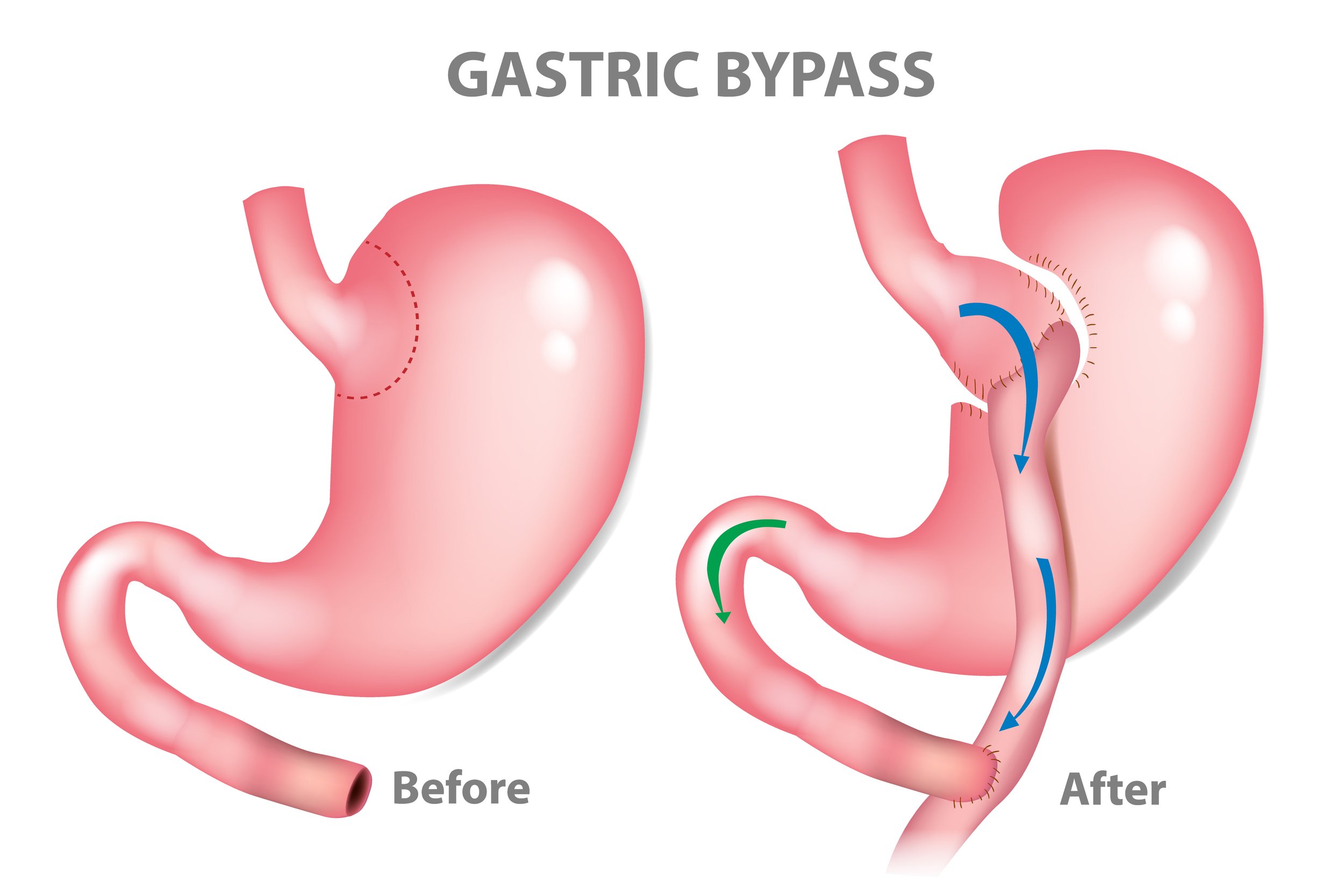
Roux en Y Gastric Bypass
The stomach is made into a small pouch. The small intestine is then rerouted to this pouch. This will reduce the amount of calories that can be taken in, as well as skip the first part of digestion
Bariatric Conversions versus Revisions
Sometimes patients don’t receive the full benefit of a bariatric operation. Click below to learn more about what your options may be.
Do I qualify for Bariatric Surgery?
Most major insurances now provide bariatric surgical coverage. To qualify, your BMI must be over 40 or over 35 if you also have obesity-related medical problems. These problems include high blood pressure, diabetes, high cholesterol, sleep apnea and many others.
What should my BMI be?
BMI is not a perfect measurement by any means, but can serve as a guide. The following categories are widely accepted by most organizations:
BMI less than 25 normal
BMI 25-30 is overweight
BMI over 30 = class I obesity
BMI over 35 = class 2 obesity
BMI over 40 = class 3 obesity
What is my BMI?
Your BMI or Body Mass Index is based on both your height and weight. Calculate your BMI below.
Why should I consider Bariatric Surgery?
-

Add years to your life!
Studies have shown that Bariatric Surgery can add 9 or more years to your life expectancy. It specifically reduces the chance of dying from heart disease by 40%, diabetes by 90% and even cancer by up to 60%.
-

Take fewer medications!
Many medical problems are closely related to your weight, including high blood pressure, sleep apnea and diabetes. Surgery is >80% effective in reducing medication requirements, making your CPAP unnecessary, and can even put your diabetes in remission.
-

Unanimous support
Bariatric Surgery isn’t just recommended by surgeons. All major medical societies support the efficacy of Bariatric Surgery in improving your health. This includes cardiologists, pulmonologists, nephrologists, orthopedists, and family practitioners to name a few.
***The information provided on this website is intended for educational purposes only and should not be construed as medical advice. Viewing this website does not establish a physician-patient relationship. Individual treatment decisions should be made in consultation with a qualified healthcare professional.***